
Africa
Morocco’s Value Added Tax (VAT) rate stands at 20%, making it the second highest in Africa after Djibouti’s 33%. Madagascar shares the same VAT rate as Morocco, followed by Cameroon at 19.25%, while Nigeria has the lowest VAT rate in Africa at 7.5%. Globally, Bhutan leads with the highest VAT rate of 50%. Morocco’s high VAT rate is attributed to government policies aimed at managing the budget deficit and its reliance on exports.
US Tariff Proposal and Its Implications
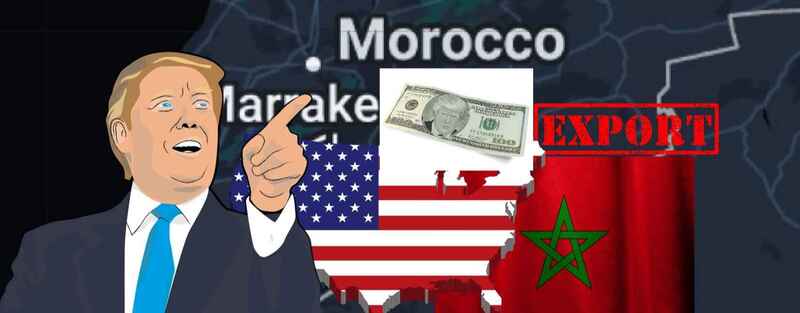
In February 2025, President Trump proposed imposing equal tariffs on countries using VAT systems to protect US domestic producers.
This policy would directly impact Morocco, whose exports to the US include motor vehicles, semiconductors, chemical fertilizers, and mixed minerals. In 2023, Morocco exported automobiles worth $8 billion globally, with goods valued at $1.98 billion imported by the US.
The proposed 20% tariff on Moroccan goods could make them less competitive in the US market compared to domestic products and imports from countries with lower VAT rates.
Economic Consequences for Morocco
The imposition of equal tariffs could lead to several economic challenges for Morocco:
US Tariff Proposal and Its Implications
In February 2025, President Trump proposed imposing equal tariffs on countries using VAT systems to protect US domestic producers.
This policy would directly impact Morocco, whose exports to the US include motor vehicles, semiconductors, chemical fertilizers, and mixed minerals. In 2023, Morocco exported automobiles worth $8 billion globally, with goods valued at $1.98 billion imported by the US.
The proposed 20% tariff on Moroccan goods could make them less competitive in the US market compared to domestic products and imports from countries with lower VAT rates.
Economic Consequences for Morocco
The imposition of equal tariffs could lead to several economic challenges for Morocco:
- Reduced Export Volumes: US importers may seek alternative suppliers from countries with lower VAT rates, causing a decline in Moroccan exports.
- Trade Balance Pressure: Reduced exports to the US could result in a trade deficit and economic slowdown due to lower tax revenue.
- Foreign Direct Investment Impact: American companies operating in Morocco’s textiles, aerospace, and automobile sectors may shift investments to countries with more favorable trade terms.
- Diplomatic Strain: The proposed tariffs would violate the 2006 US-Morocco Free Trade Agreement, potentially leading to trade conflicts and requiring new negotiations.
Strategic Restructuring for Morocco
To counter the anticipated policy changes, Morocco should consider the following strategies:
- Diversify Trade Partners: Reduce reliance on the US by seeking new economic ties with African countries, China, and the EU.
- Negotiate Trade Terms: Advocate for tariff reductions or exemptions, particularly in key export sectors like agriculture and automobiles.
- Strengthen Domestic Markets: Support local industries through investment, tax incentives, and subsidies to boost production and manufacturing.
- Lower VAT Rates: Explore reducing VAT rates or offering exemptions to enhance competitiveness in global markets.
Preparing for Change
The proposed US tariff policy presents significant challenges for Morocco’s economy and trade relations. By implementing strategic restructuring, diversifying trade partnerships, and strengthening domestic markets, Morocco can mitigate the impact of these changes and foster sustainable economic growth. Proactive measures will be essential to navigate the anticipated policy shifts and ensure long-term stability.