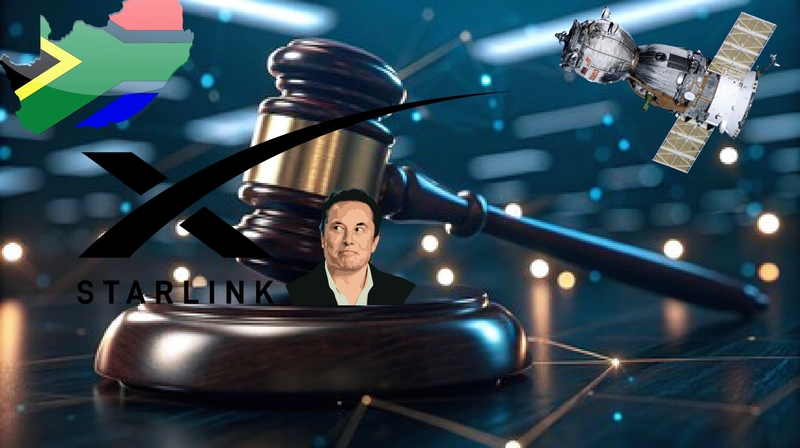
A representation of regulatory challenges or approvals Starlink faces in South Africa. Image: Pixabay
Africa
Elon Musk’s Starlink has gained global attention for its efforts to provide satellite internet in remote and underdeveloped areas. However, the service has encountered regulatory hurdles in several countries, including South Africa, Namibia, and Kenya. In Namibia, regulations on foreign ownership and local partnerships posed challenges, while in Kenya, licensing requirements and compliance with telecommunications laws created obstacles.
South Africa’s BEE Laws and Starlink’s Resistance In South Africa
Starlink faces opposition from the country’s Broad-Based Black Economic Empowerment (B-BBEE) legislation, which mandates foreign companies to allocate at least 30% of their shareholding to Black-owned businesses to secure specific business licenses. These laws aim to redress the economic inequalities of apartheid.
Musk, however, has publicly opposed these requirements, labeling them “racial discrimination,” sparking a heated debate on whether such policies foster or hinder economic development.
Government Stance and Market Demand
The Independent Communications Authority of South Africa (ICASA) has reaffirmed that Starlink must adhere to the same licensing regulations as other telecom providers and warned of fines for operating without compliance.
Despite significant demand for Starlink’s services in underserved rural areas, South African authorities have refused to grant exemptions, maintaining their commitment to BEE policies.
Public and Political Reactions in South Africa
Musk’s criticisms have intensified political discussions. Proponents of BEE policies argue that exempting Starlink would undermine efforts to empower historically disadvantaged communities.
Critics claim these regulations are discouraging much-needed foreign investment in South Africa’s tech and digital sectors. Comparisons with neighboring countries such as Mozambique, Zambia, Zimbabwe, and Eswatini, where Starlink has launched without similar restrictions, have further fueled the debate.
Starlink’s Success in Other African Nations
While navigating regulatory barriers in South Africa, Starlink has successfully expanded its services in other African countries. In Mozambique, Starlink has improved internet access in rural areas, benefiting education, healthcare, and economic opportunities. Similar outcomes are reported in Zambia and Zimbabwe, highlighting the potential impact of Starlink’s presence.
Possible Outcomes for Starlink in South Africa
The future of Starlink in South Africa remains uncertain. One possibility is compliance with BEE laws through partnerships with Black-owned businesses, a strategy Musk has opposed. Alternatively, South Africa could offer an exemption, though this seems unlikely given the government’s firm stance on economic empowerment.
The conflict might escalate into a prolonged legal or legislative dispute. Meanwhile, the illicit importation of Starlink kits by South Africans underscores the growing demand for the service.
The Broader Implications of the Conflict
The standoff between Starlink and South Africa extends beyond internet access. It represents a clash of ideologies, pitting economic redress policies against the need for foreign investment and digital progress.
The resolution of this conflict will have lasting implications for South Africa’s regulatory approach, digital infrastructure development, and the balance between promoting economic empowerment and attracting global business.
South Africa’s BEE Laws and Starlink’s Resistance In South Africa
Starlink faces opposition from the country’s Broad-Based Black Economic Empowerment (B-BBEE) legislation, which mandates foreign companies to allocate at least 30% of their shareholding to Black-owned businesses to secure specific business licenses. These laws aim to redress the economic inequalities of apartheid.
Musk, however, has publicly opposed these requirements, labeling them “racial discrimination,” sparking a heated debate on whether such policies foster or hinder economic development.
Government Stance and Market Demand
The Independent Communications Authority of South Africa (ICASA) has reaffirmed that Starlink must adhere to the same licensing regulations as other telecom providers and warned of fines for operating without compliance.
Despite significant demand for Starlink’s services in underserved rural areas, South African authorities have refused to grant exemptions, maintaining their commitment to BEE policies.
Public and Political Reactions in South Africa
Musk’s criticisms have intensified political discussions. Proponents of BEE policies argue that exempting Starlink would undermine efforts to empower historically disadvantaged communities.
Critics claim these regulations are discouraging much-needed foreign investment in South Africa’s tech and digital sectors. Comparisons with neighboring countries such as Mozambique, Zambia, Zimbabwe, and Eswatini, where Starlink has launched without similar restrictions, have further fueled the debate.
Starlink’s Success in Other African Nations
While navigating regulatory barriers in South Africa, Starlink has successfully expanded its services in other African countries. In Mozambique, Starlink has improved internet access in rural areas, benefiting education, healthcare, and economic opportunities. Similar outcomes are reported in Zambia and Zimbabwe, highlighting the potential impact of Starlink’s presence.
Possible Outcomes for Starlink in South Africa
The future of Starlink in South Africa remains uncertain. One possibility is compliance with BEE laws through partnerships with Black-owned businesses, a strategy Musk has opposed. Alternatively, South Africa could offer an exemption, though this seems unlikely given the government’s firm stance on economic empowerment.
The conflict might escalate into a prolonged legal or legislative dispute. Meanwhile, the illicit importation of Starlink kits by South Africans underscores the growing demand for the service.
The Broader Implications of the Conflict
The standoff between Starlink and South Africa extends beyond internet access. It represents a clash of ideologies, pitting economic redress policies against the need for foreign investment and digital progress.
The resolution of this conflict will have lasting implications for South Africa’s regulatory approach, digital infrastructure development, and the balance between promoting economic empowerment and attracting global business.