
Asia
Explore how China’s manufacturing powerhouse fuels global supply chains while battling a massive counterfeit market. Read the full analysis of the global impact.
As of 2026, China holds an estimated 28% share of global manufacturing output and is rapidly moving from low-cost assembly into advanced sectors like electric vehicles and solar technology, forming a dominant “G2” with the United States.
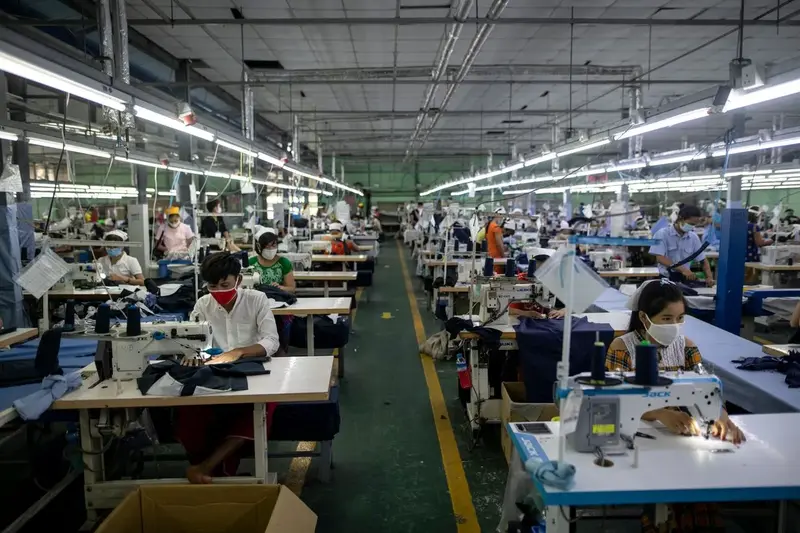
Yet this industrial scale presents a persistent quality divide: large, regulated factories produce world-class goods while smaller, price-driven workshops continue to generate counterfeit and substandard products, fuelled by intense competition, weak local enforcement and buyer pressure for low prices.
Key Takeaways
- A dual reality defines Chinese manufacturing: a high-tech, high-value surge coexists with millions of smaller factories where quality control is weak and counterfeits originate.
- Substandard production is a market and enforcement problem, not a state strategy: price-driven demand, fragmented factories, and uneven local enforcement enable low-quality goods, even as central policy pushes quality upgrading.
- The solution requires coordinated supply-chain action: manufacturers must adopt international standards and transparency, governments must enforce regulations at the factory level and strengthen borders, and consumers must move beyond price-only purchasing and verify authenticity.
The Scale-Quality Divide in Chinese Manufacturing
China's economic growth is highly attributed to the manufacturing industry. In the global market, China has dominated manufacturing output, accounting for 28% of global output equaling the combined output of Germany, Japan, and the US (United Nations Industrial Development Organization).
Besides its position globally, it records about 4.5% to 6% year-on-year normalized industrial growth rate aligning closely with its GDP growth targets of 4.5% to 5.5%. Despite holding the top competitive position in manufacturing, the production of quality products has been a key issue for global debate.
Besides its position globally, it records about 4.5% to 6% year-on-year normalized industrial growth rate aligning closely with its GDP growth targets of 4.5% to 5.5%. Despite holding the top competitive position in manufacturing, the production of quality products has been a key issue for global debate.
According to the UNIDO Competitive Industrial Performance Index, nations like Germany and Switzerland continue to lead the global market in manufacturing high-value, high-quality, and technologically advanced products.
To understand China’s manufacturing, we look at the recent shifts in global manufacturing output and what they reveal about China's changing position.
Leading Countries in Manufacturing (2020–2025)
While China has been cited to produce substandard goods, data on its manufacturing output and technological upgrading tells a more complex story. China has shown its prowess by shifting from being a ‘basic manufacturing economy’ to a high-level automated manufacturing economy.
The figure represents China's position in its global manufacturing output.
Values are represented in Billions of USD ($B) or Trillions of USD ($T)
The figure represents China's position in its global manufacturing output.
Values are represented in Billions of USD ($B) or Trillions of USD ($T)

Key Insights from Global Manufacturing Output
- The Rise of a “G2” Manufacturing Power Structure
China and the United States now dominate global manufacturing so completely that the rest of the world operates far behind them. This creates a two-pole system, where global supply chains, investment flows, and industrial strategy are shaped primarily by decisions made in Beijing and Washington.
Since manufacturing power is concentrated in just these two economies, their policies—tariffs, trade rules, subsidies, and industrial incentives—set the direction for global markets. Smaller manufacturing nations have little ability to counter these shifts and often find themselves pulled into the economic orbit of one superpower or the other.
- China’s Shift from “Factory of the World” to Global Manufacturing Frontrunner
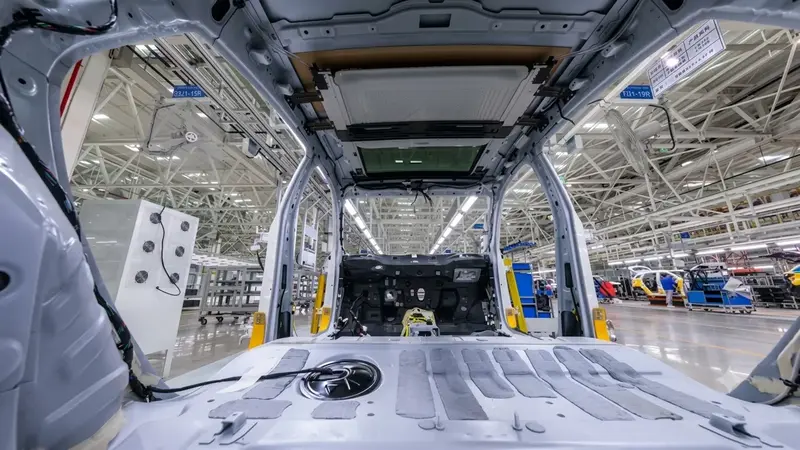
China’s $810 billion increase in manufacturing output during this period directly challenges the idea that production is rapidly fleeing the country. While some low-cost assembly has moved to Southeast Asia or Mexico, China has simultaneously scaled up its advanced, high-value manufacturing sectors—including electric vehicles, solar technology, and lithium-ion batteries.
This has created a powerful scale advantage for China’s vast, deeply interconnected supply chain ecosystem delivering efficiencies that other countries cannot easily replicate.
As a result, a full move away from China remains extremely difficult for global companies, even as they diversify parts of their production footprint.
- Germany’s Fragile Hold on Europe’s Manufacturing Lead
While Germany has risen above Japan to become the world’s third largest manufacturer, its output grew only marginally from $810 billion to $843.7 billion, revealing how severely the country has been squeezed by high energy prices and rising production costs.
This shift is not the result of a European industrial boom. Instead, Germany’s ranking reflects Japan’s steeper decline, not Germany’s strength.
- Japan’s Industrial Decline
Japan’s gradual decline in manufacturing output, from $920 billion to $867 billion, reflects deep, long-term demographic and economic challenges. With a rapidly aging and shrinking workforce, many of Japan’s major industrial firms have increasingly shifted production to Southeast Asia and the Americas.
As a result, Japanese corporations remain globally competitive and profitable, but the amount of manufacturing that actually takes place inside Japan continues to shrink.
- The Realities Behind the China+1 Shift for India and South Korea
As global companies diversify their supply chains through China+1 strategies, India and South Korea are emerging as two very different but equally important beneficiaries.
- India’s Scale Advantage: India’s rapid rise from 2020 to 2022 shows its potential to become the leading destination for large-scale, labour-intensive manufacturing. But its slower growth toward 2025 reveals the limits of its current infrastructure and regulatory environment. India has the population and ambition to absorb massive production volumes, but it still needs time to build the capacity required for high-level manufacturing.
- South Korea’s High-Tech Specialization: South Korea, by contrast, has shown high capabilities by focusing on advanced, high-value industries. Its dominance in semiconductors, display technologies, and EV battery components makes it an essential—and often irreplaceable—node in global supply chains. Despite its small size, Korea’s deep specialization ensures it remains a critical partner in the global high-tech ecosystem.
These global output trends show China’s manufacturing strength clearly, but they do not erase the long-standing problem of counterfeit and low-quality goods.
The same industrial system that produces advanced EVs and aircraft also contains segments that continue to generate substandard products, as the following statistics illustrate.
The Contrasting Statistics
A 2015 report by The Guardian indicated that 40% of goods sold online in the Chinese market were of poor quality or counterfeit, while only 59% were of good quality or genuine. At the time of the report, Alibaba, a Chinese online shopping company, was blacklisted in the US for selling counterfeit goods.
According to OECD and EUIPO (2023), China has dominated as the global source of counterfeit and pirated products, accounting for about 50% of global counterfeit goods.
According to OECD and EUIPO (2023), China has dominated as the global source of counterfeit and pirated products, accounting for about 50% of global counterfeit goods.
The statistics presented regarding manufacturing output and quality ranking raise questions about the balance of the Chinese manufacturing sector. Various claims have questioned the reputation of products manufactured in China. In 2024 alone, the US Customs and Border Protection identified 90% of seized counterfeit and pirated products as originating from China.
Chinese Government Reports on Low-Quality and Fake Products
According to a 2025 report by NTD, Chinese government officials stated that the country maintains a policy of zero tolerance toward counterfeit production. The same report included external criticism suggesting that some local authorities may have indirectly benefited from counterfeit activity through tax collection, though these claims remain contested.
Data released by the Supreme People’s Procuratorate in 2025 reported that 5,745 suspects were arrested and 18,376 individuals were prosecuted in connection with the production or sale of counterfeit or substandard goods. These figures indicate that such activities remain a significant enforcement focus within China.
Following a 2025 World Trademark Review report noting an increase in intellectual property–related offenses, the State Council Information Office reiterated the government’s commitment to strengthening intellectual property rights (IPR) protections and improving enforcement mechanisms.
What Drives Manufacturing of Substandard Products?
Several structural and market factors help explain why low-quality and counterfeit goods continue to come out of parts of China’s manufacturing sector.
Several structural and market factors help explain why low-quality and counterfeit goods continue to come out of parts of China’s manufacturing sector.
- Price-Driven Production: Importers prioritize low-priced products, which they term favorable, marketable, and fast-moving in their markets to maximize their profit margins. As a result, Chinese factories manufacture goods that fit the buyer's budget and specifications. When price is the top priority, the manufacturer focuses on two areas: producing high-quality products for major brands and low-quality products for smaller brands and consumers at discounted prices.
- High Number of Manufacturers: China has millions of factories, ranging from world-class manufacturers to small workshops. The different statures of manufacturers reflect varying production capabilities, leading to significant variations in quality.
- Intense Competition: The global market is highly competitive; to counter this, Chinese manufacturers reduce costs by simplifying production processes, performing less rigorous testing, and lowering material quality.
- Weak Enforcement: Although China has established strict regulations on product quality, enforcement remains uneven—particularly among smaller or informal manufacturing operations. Limited oversight capacity and regional variations in regulatory implementation can create gaps that allow substandard goods to enter the market.
- Weak Quality-Control Systems: Despite many Chinese manufacturers operating with robust quality assurance processes, oversight can vary significantly across regions and factory sizes. In smaller or lower-tier facilities, inconsistent quality control practices and limited technical capacity can lead to lapses that allow substandard products to be produced and distributed.
Cases where product specifications are not disclosed to the end user represent more safety issues for the final consumer. The issues become more problematic when the manufacturer:
- Uses materials that fail to meet agreed specifications
- Misrepresents product performance
- Uses counterfeit certifications or safety labels
- Substitutes inferior components without informing buyers
Is the Chinese Counterfeit Manufacturing Claim Valid?
China is the world's largest manufacturing economy, with international companies such as Apple relying on Chinese factories to produce high-quality, standardized products. Reports from various organizations indicate that counterfeit and substandard goods continue to be an enforcement challenge within certain segments of China’s manufacturing landscape.
It is therefore important to distinguish between China’s advanced, regulated industrial sectors and the smaller, less regulated operations where quality issues are more likely to occur.
Is the Manufacturing of Low-Quality Products a Chinese Strategy?
The Chinese government has no policy to encourage the manufacturing of low-quality products. On the contrary, it invests in improving the quality standards of products such as aerospace, semiconductors, and electric vehicles.
For example, BYD manufactures electric vehicles that compete with and now outpace Tesla, BMW, Volkswagen, and Mercedes-Benz in terms of reliability and technology.
For example, BYD manufactures electric vehicles that compete with and now outpace Tesla, BMW, Volkswagen, and Mercedes-Benz in terms of reliability and technology.
The COMAC C919 (which began its official commercial passenger service in 2023) is a quality aircraft manufactured to compete with the Boeing 737 MAX and the Airbus A320neo, and it is one that could alter the aerospace industry heavily dominated by US companies.
However, local governments have failed to fully enforce quality policies and instead prioritize economic growth, thereby creating a thriving environment for poor-quality manufacturers.
However, local governments have failed to fully enforce quality policies and instead prioritize economic growth, thereby creating a thriving environment for poor-quality manufacturers.
Effect of Low-Quality and Counterfeits in the Global Market
Low-quality and counterfeit goods in the global market are a threat to fair competition, consumer safety, and innovation. A report by OECD (2025) indicates that fake goods increasingly pose health and safety risks, especially in clothing, footwear, and leather goods.
In addition, they affect economic growth, public safety, and intellectual property rights. African countries, especially Kenya, Uganda, Nigeria, South Africa, and Ghana, are most affected by low-quality and counterfeit products, including electrical products, building materials, spare parts, and solar products. Other regions affected include Southeast Asia, Latin America, and South Asia.
A huge, uneven factory network, pressure for low prices, and inconsistent regulation have allowed poor‑quality and counterfeit products to exist alongside top‑tier manufacturing. This mix affects consumer safety, fair competition, and innovation, especially in developing countries.
Fixing the problem isn’t about choosing between growth and quality. It requires coordinated, practical action across the entire supply chain. The recommendations below outline concrete steps for manufacturers, governments, and consumers to address the root issues without undermining the industrial progress China has already achieved.
Policy Recommendations for Tackling Counterfeit Issues
For Manufacturers
- Adopt and maintain international quality management systems, even when buyers do not demand them.
Voluntarily implementing ISO 9001 and industry-specific certifications builds a reputation for reliability, opens doors to higher-value contracts, and reduces the risk of producing substandard goods when specifications are loose. - Refuse to produce goods where undisclosed material substitutions or safety shortcuts are requested.
Rejecting such requests protects the end user and shields the manufacturing company from legal and reputational damage, even if it means losing a low-margin order. - Invest in internal quality-control capacity and staff training, especially in smaller and lower-tier facilities.
Inconsistent quality control practices and limited technical capacity allow substandard products to be produced. Even in smaller workshops, systematic testing, clearer production protocols, and trained quality inspectors can significantly raise output standards and reduce the risk of counterfeit or dangerous goods leaving the factory. - Disclose product specifications and material sourcing transparently to all supply chain partners.
Manufacturers should voluntarily share full product details including materials, performance limits, and certifications, and in return build trust and differentiate themselves from the fragmented, low-quality competition.
For Governments
- Close the enforcement gap by targeting small workshops and informal factories.
Strict national regulations exist, but oversight remains weak among lower-tier and smaller manufacturers. Governments must direct inspection resources and accountability measures beyond large, visible exporters and into the fragmented lower end of the manufacturing sector where substandard production thrives. - Make international quality standards mandatory across all production tiers and raise penalties for violations.
Require all manufacturers, not just those supplying major international brands, to adhere to ISO 9001 and industry-specific certifications. Increase fines and legal consequences for producing or exporting substandard and counterfeit goods. - Strengthen border controls with digital tracking, product verification systems, and physical testing.
Customs authorities in importing nations, especially in the heavily affected African, Southeast Asian, and South Asian regions, must be equipped to intercept dangerous and counterfeit items before they reach consumers. This means deploying traceability technology, mandatory sampling and testing, and systems that can verify product claims at the point of entry.
For Consumers
- Stop choosing products based on price alone and demand clear specifications.
Consumers should insist on knowing what materials are used, what certifications the product holds, and whether any safety standards have been followed. - Check product authenticity and certification before buying, especially online.
With counterfeit goods dominating global seizures, consumers should verify marks, certification labels, and seller reputation. If safety labels are missing or specifications are not disclosed, treat the product as a risk.
Explore further on Whether Asian Countries and Mexico can replace China's Manufacturing Power:
The 'Anything But China' Tech Revolution, Can Vietnam, India & Mexico Replace The World's Factory?
Frequently Asked Questions
1. Why does China remain a top source of counterfeit goods despite its advanced manufacturing?
China’s industrial landscape is split. World-class factories produce high-quality goods for global brands, but millions of smaller workshops operate with weak quality control and limited oversight. Price-driven demand from international buyers, intense competition, and uneven local enforcement create conditions where substandard and counterfeit production continues to thrive alongside high-tech manufacturing.
China’s industrial landscape is split. World-class factories produce high-quality goods for global brands, but millions of smaller workshops operate with weak quality control and limited oversight. Price-driven demand from international buyers, intense competition, and uneven local enforcement create conditions where substandard and counterfeit production continues to thrive alongside high-tech manufacturing.
2. Does the Chinese government encourage counterfeit production?
No. China’s policy is explicitly against counterfeits, with increasing prosecutions and investments in quality upgrading in sectors like aerospace and electric vehicles. The problem lies with some local governments that prioritize economic growth and tax revenue over rigorous enforcement, allowing gaps that counterfeiters exploit.
No. China’s policy is explicitly against counterfeits, with increasing prosecutions and investments in quality upgrading in sectors like aerospace and electric vehicles. The problem lies with some local governments that prioritize economic growth and tax revenue over rigorous enforcement, allowing gaps that counterfeiters exploit.
3. Which regions are most affected, and how can consumers protect themselves?
African countries (Kenya, Uganda, Nigeria, South Africa, Ghana), Southeast Asia, Latin America, and South Asia are hit hardest, especially in electrical goods, building materials, and spare parts. Consumers should demand clear specifications and certification labels, verify seller reputation before purchasing online, and treat missing safety information as a warning sign. This shifts pressure away from price-only buying and removes incentives for cutting corners.
African countries (Kenya, Uganda, Nigeria, South Africa, Ghana), Southeast Asia, Latin America, and South Asia are hit hardest, especially in electrical goods, building materials, and spare parts. Consumers should demand clear specifications and certification labels, verify seller reputation before purchasing online, and treat missing safety information as a warning sign. This shifts pressure away from price-only buying and removes incentives for cutting corners.