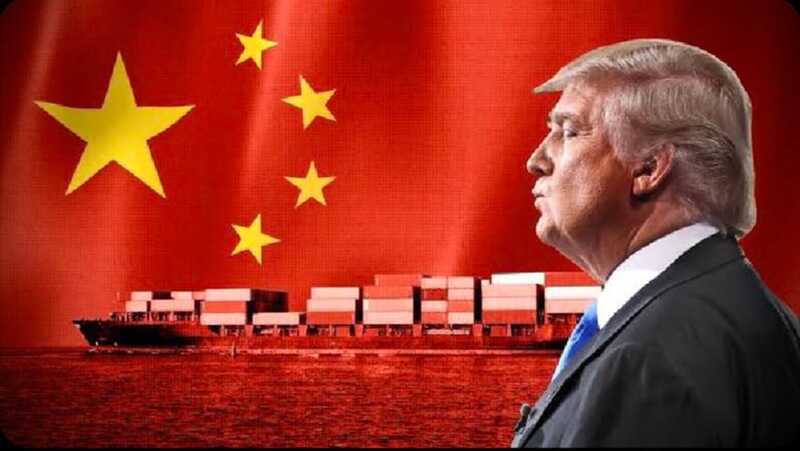
Donald Trump profile against Chinese flag backdrop with cargo ship symbolizing US‑China trade relations. Image credits: War Intel via X
NorthAmerica
The Trump administration has announced a significant shift in its tariff strategy, unveiling broad exemptions that remove smartphones, computers, and a wide range of electronic devices from the previously imposed 125% import tax on Chinese goods. Updated guidance from U.S. Customs and Border Protection confirms that these exemptions also apply to the administration’s global 10% tariff on most countries. This marks the first major exception in what has been one of President Trump’s most aggressive trade campaigns targeting China, and it represents a notable recalibration in the ongoing U.S.–China trade war.
Relief for U.S. Tech Companies
The decision follows months of pressure from U.S. technology firms, many of which warned that the tariffs would trigger steep price increases for consumer electronics. A large share of America’s most popular devices—including smartphones, laptops, tablets, and gaming consoles—are still manufactured in China.
The exemptions, retroactive to April 5, cover not only finished products but also essential components such as semiconductors, solar panels, memory storage units, and other hardware inputs. For companies navigating global supply chains, the relief is immediate and substantial, especially for firms heavily dependent on Chinese manufacturing.
Analysts Call It a “Game‑Changer”
Dan Ives, global head of technology research at Wedbush Securities, praised the move as a pivotal moment for the tech sector. Posting on X (formerly Twitter), he described the exemption as a “game‑changer” for investors and a rare moment of clarity in an otherwise turbulent trade environment.
Ives noted that shielding smartphones and chips from tariff pressure represents a meaningful shift in the administration’s China strategy, offering breathing room to major companies like Apple, Nvidia, and Microsoft—firms deeply reliant on Chinese supply chains.
President Trump Addresses the Policy Shift
Speaking aboard Air Force One on April 12, 2025, President Trump told reporters that additional details on the exemptions would be released in the coming week. He framed the policy as both economically strategic and financially beneficial, stating, “As a country, we’re taking in a lot of money,” underscoring his administration’s continued emphasis on tariff revenue as leverage in trade negotiations.
White House: A Move to Encourage U.S. Manufacturing
The White House later clarified that the exemptions are intended to give American companies more time to relocate manufacturing back to the United States. Press Secretary Karoline Leavitt reiterated the administration’s position that the country must reduce its dependence on China for essential technologies such as semiconductors, smartphones, and laptops.
Deputy Chief of Staff for Policy Stephen Miller added that despite the exemptions, these goods will still face a separate 20% tariff tied to fentanyl‑related enforcement concerns.
What This Means for Consumers
Before the exemption was announced, analysts warned that iPhone prices in the U.S. could triple if the full tariff burden were passed on to consumers. The U.S. remains Apple’s most important market, accounting for more than half of its smartphone sales last year. Roughly 80% of iPhones sold domestically are produced in China, with the remainder manufactured in India.
The exemption therefore serves as a crucial buffer against sudden price spikes, offering stability for both consumers and the broader tech market.