
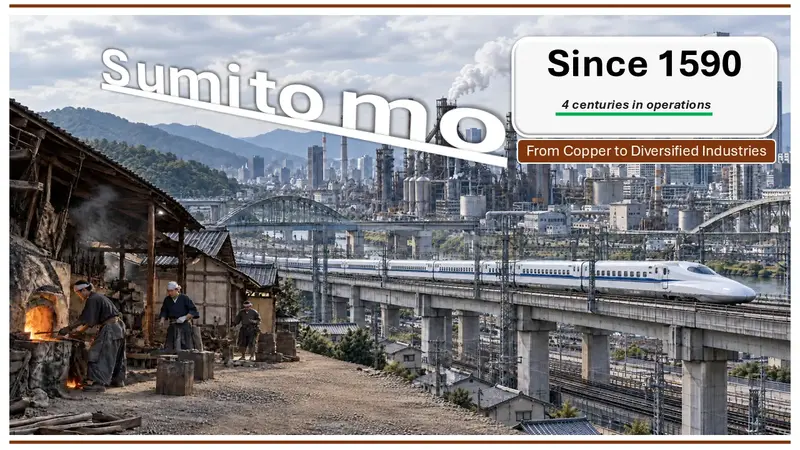
Sumitomo Group's transformation from traditional copper refining in 1590 to a global diversified industrial enterprise.
Asia
How did Sumitomo Corporation survive 400 years? Explore its transformation from copper trading to ESG and digital leadership in this strategic analysis.
In 1615, a book and medicine shop opened in Kyoto. Four hundred years later, the enterprise born from that humble beginning stands as one of the world's most diversified trading houses in the world. Its operations span renewable energy, digital infrastructure, smart cities, and consumer finance across more than 60 countries.
How does a company survive four centuries and what does it mean for the modern-day businesses?
That is the question at the heart of this comprehensive analysis.
This is a practical blueprint for leaders confronting industry disruption, portfolio complexity, and the challenge of preserving a founder's mission in a changing world.
What This Analysis Explores
This strategic analysis traces Sumitomo Corporation's extraordinary journey from its origins in copper refining through its emergence as a modern global conglomerate.
Several leaders steered the company through different eras:
- Kenji Miyahara, the crisis steward who inherited the wreckage of the 1996 copper scandal and led the governance reforms that would define the next quarter-century.
- Motoyuki Oka, the visionary modernizer who pushed the corporation beyond commodity trading into infrastructure, consumer businesses, and early ESG awareness.
- Kuniharu Nakamura, the strategic pivot leader who diversified away from resources and delivered record earnings for the company.
- Shingo Ueno, the current execution-focused transformer now deploying a trillion yen into renewable energy while targeting carbon neutrality by 2050.
Each leader inherited a different institution and left it fundamentally changed.
A Parallel Case: Sumitomo and Kellogg
This analysis also draws striking parallels between Sumitomo's transformation and the strategic reinvention of another century-old giant that is Kellogg Company. Two legacy corporations, two crises, and one shared blueprint for survival through structural transformation.
The comparison reveals patterns that apply far beyond Japanese trading houses or American consumer brands. They are patterns that speak to any organization facing the question of whether to defend a declining core or reinvent for an uncertain future.
Who This Analysis Is For
- C-Suite executives navigating conglomerate complexity and portfolio transformation.
- Strategic thinkers seeking frameworks for managing crisis-driven change.
- Analysts and investors evaluating the long-term value of diversified business models.
- Business owners and entrepreneurs building institutions intended to outlast their founders.
The Central Takeaway About Sumitomo
Sumitomo's history is not a story of constant success. It includes moments when the company almost failed, faced hard truths, and had to slowly rebuild people's trust. It shows the dangers of loyalty when it turns into unquestioning obedience, and the challenges of making changes that can upset the relationships that helped build the business.
Coming Next
The full analysis examines Sumitomo's transformation and what this means for businesses. It answers two major questions:
- Can businesses withstand turbulences and survive for more than four centuries?
- What would remain of your organization if its current business model became obsolete tomorrow?
Sumitomo has answered that question across four centuries. The answers may surprise you.