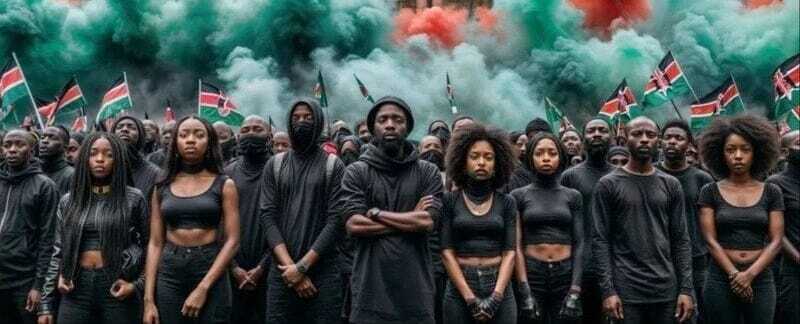
Kenyan youths protesting outside parliament buildings. Photo Credits: Change.org
Africa
Social media platforms such as Facebook, WhatsApp, X (formerly Twitter), Instagram, Threads, and WeChat have long been central to how people communicate, connect, and share content. For years, these platforms served primarily as digital meeting points—spaces where friendships were formed, families stayed in touch, and professional networks quietly expanded.
But in recent months, Kenya has witnessed a dramatic evolution in how social media is used. What was once a tool for casual interaction has now become a powerful engine for political mobilization, civic education, and nationwide activism.
But in recent months, Kenya has witnessed a dramatic evolution in how social media is used. What was once a tool for casual interaction has now become a powerful engine for political mobilization, civic education, and nationwide activism.
Social Media and Kenya’s Youth-Led Protest Movement
Over the past two months, Kenya has been swept by widespread protests, with Nairobi emerging as the symbolic heart of the movement. In a moment that will likely be remembered for decades, protesters breached the walls of parliament—an unprecedented act that signaled deep public frustration and a bold assertion of civic agency.
At the forefront of this movement is Kenya’s Generation Z.
This digitally native, politically aware generation has organized protests that are leaderless, non-partisan, and overwhelmingly peaceful. Their ability to coordinate without a central figurehead has confounded traditional power structures. Government security agencies, accustomed to dealing with hierarchical movements, now face a decentralized force that cannot be easily contained or negotiated with.
The backbone of this coordination has been social media. Platforms like X Spaces and TikTok have transformed into virtual town halls where thousands gather to discuss policy, plan demonstrations, and share real-time updates. These platforms have also become educational spaces, helping citizens understand governance, public finance, constitutional rights, and the implications of proposed laws.
The Shift: From Communication to Accountability
What sets this movement apart is how Kenyan youth have repurposed social media into a tool for demanding accountability. They are challenging long-standing political norms, calling for transparency, responsible leadership, and people-centered governance. This movement is not driven by party politics or ideological divides—it is driven by a collective desire for a government that listens, responds, and delivers.
Social media has become the bridge between citizens and power, enabling young people to question leaders directly, expose misinformation, and mobilize communities with unprecedented speed.
A Ripple Effect Across Africa
Kenya’s digital uprising is resonating across the continent. In Uganda, Nigeria, Ghana, and beyond, young people are increasingly using social platforms to question authority, organize protests, and amplify civic issues. The Kenyan example has shown that digital literacy and widespread access to social media can reshape national conversations and empower citizens to influence policy.
This moment marks a significant turning point in Africa’s democratic evolution. As more young Africans embrace digital tools, they are redefining civic participation, shaping political narratives, and laying the groundwork for a more engaged, informed, and assertive generation of citizens.